
Uncategorized

Tunisian pottery is admired not only for its beauty but also for the traditional techniques used to create each piece. These methods have been preserved for centuries and continue to be practiced by skilled artisans across the country. 1. Clay Preparation The process begins with selecting and...

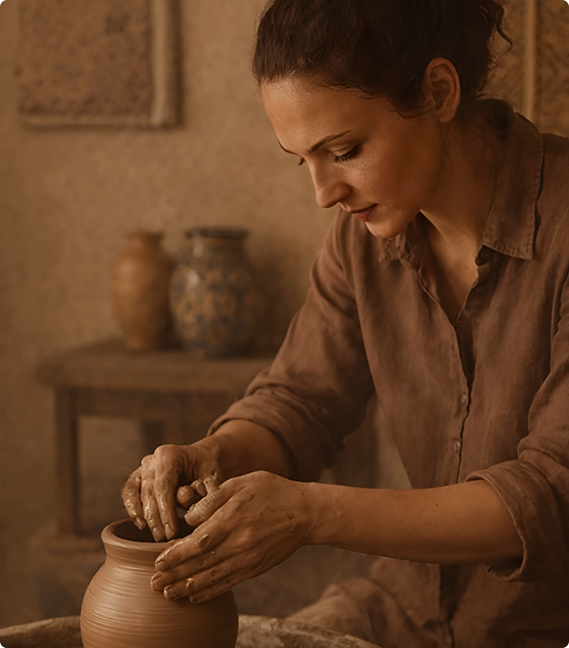
Nabeul is widely recognized as the most important center of pottery in Tunisia. Located on the northeastern coast, this vibrant city has built its reputation over centuries as the home of skilled ceramic artisans and colorful handcrafted pottery. The craft of pottery in Nabeul is deeply...

The history of pottery in Tunisia dates back to ancient times, when early civilizations first settled in the region and began shaping clay for everyday use. Over centuries, Tunisia became a cultural crossroads where Phoenician, Roman, Arab, Berber, and Ottoman influences all left their mark...

In Tunisia, pottery is more than craft—it's a story shaped by earth, fire, and time. From the sunbaked villages of Sejnane to the vibrant workshops of Nabeul, each piece carries the imprint of generations who have preserved this art with pride and passion. Hand-molded clay...